
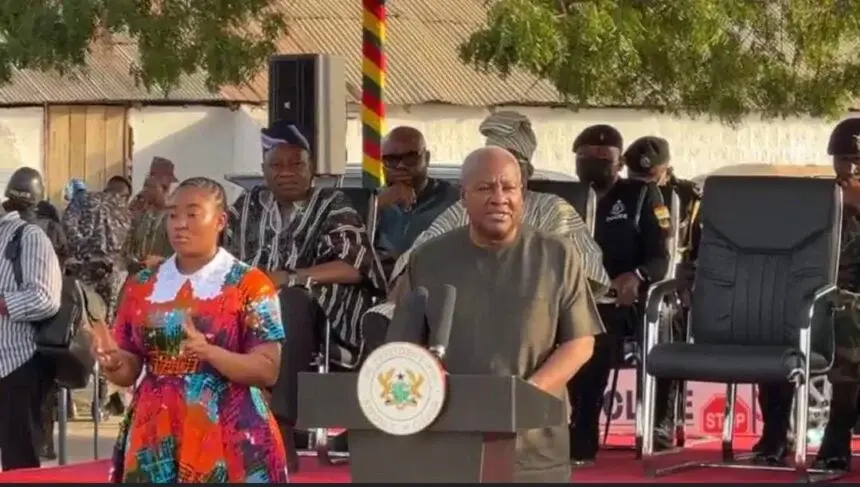

Wa, Upper West Region — February 2, 2026 — President John Dramani Mahama has dismissed claims that the siting of the new Wa Market was influenced by “orders from above,” insisting that the decision was made through local consultations and community-driven processes. His remarks come amid ongoing public debate over the location of the market, which has attracted both praise and criticism from residents and political observers.
The Wa Market project, part of government’s broader agenda to modernize trading centers across Ghana, has been a subject of heated discussion in recent weeks. Some residents and political commentators alleged that directives from Accra influenced the choice of location, sidelining local voices.
Critics argued that the site chosen for the market was inconvenient for traders and customers, raising concerns about accessibility and economic viability. Others suggested that political considerations may have played a role in the final decision.
Addressing the issue during a community engagement in Wa, President Mahama firmly rejected the allegations. He emphasized that the siting of the market was determined by local authorities, traditional leaders, and municipal planners after extensive consultations.
“There were no orders from above. The decision was made right here in Wa, by the people and leaders who understand the needs of this community,” Mahama stated. He added that the government’s role was to provide funding and technical support, not to dictate local development choices.
Reactions among residents have been mixed. Some traders welcomed the president’s clarification, noting that the new market location offers more space, improved facilities, and opportunities for expansion. “We believe this market will help us grow our businesses and attract more customers,” one trader said.
Others remain skeptical, arguing that the site is far from the town center and may reduce foot traffic. “We wanted the market closer to where people live and work. Moving it further away could affect our sales,” another resident remarked.
The controversy has sparked broader conversations about governance and community participation in development projects. Analysts note that the Wa Market debate reflects a recurring tension between central government initiatives and local autonomy.
Political observers suggest that Mahama’s firm dismissal of the “orders from above” narrative was aimed at reinforcing trust in his administration’s commitment to decentralization. By emphasizing local decision-making, the president sought to assure citizens that development projects are not imposed but shaped by community needs.
Construction of the Wa Market is expected to continue, with government promising modern facilities including storage areas, sanitation systems, and improved security. Officials say the project will boost economic activity in the Upper West Region and provide traders with a safer, more organized environment.
President Mahama urged residents to support the project, stressing that unity and cooperation are essential for successful development. “This market belongs to the people of Wa. Let us work together to make it a center of growth and opportunity,” he said.
Conclusion
The Wa Market controversy underscores the importance of transparency and community involvement in development planning. While disagreements remain over the location, President Mahama’s insistence that decisions were locally driven may help ease tensions and restore confidence in the project.
As construction progresses, the market is expected to become a focal point of economic activity in Wa, symbolizing both the challenges and opportunities of Ghana’s decentralization agenda.