
Calls for Historical Accountability and National Reflection
Renowned Ghanaian legal scholar, Professor Kwaku Azar, has issued a strong caution against proposals to rename the Kotoka International Airport (KIA), arguing that the facility should not continue to honor a figure associated with a coup d’état. His remarks have reignited national debate about how Ghana memorializes its past, the symbolism of public institutions, and the broader implications of honoring individuals whose actions disrupted democratic governance.
Professor Azar’s intervention comes at a time when discussions about national identity, historical justice, and the politics of memory are gaining momentum. He insists that naming one of Ghana’s most important gateways after Lieutenant General Emmanuel Kwasi Kotoka, a key architect of the 1966 coup that overthrew President Kwame Nkrumah, sends the wrong signal to future generations. According to him, coups represent a rupture in constitutional order, and memorializing coup leaders risks normalizing illegitimate seizures of power.
Historical Context of Kotoka International Airport
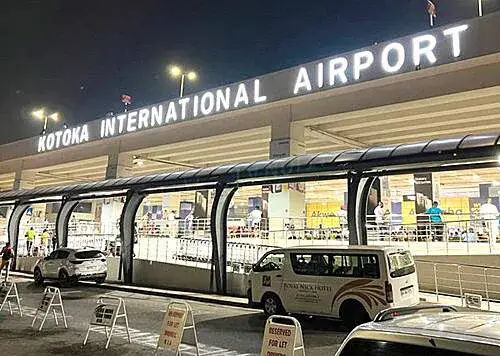
The airport, originally known as Accra International Airport, was renamed in 1969 in honor of Lt. Gen. Kotoka, who played a central role in the overthrow of Ghana’s first president. The coup was a watershed moment in Ghana’s political history, ushering in military rule and setting a precedent for subsequent interventions in governance.
For decades, the airport has stood as Ghana’s primary international hub, welcoming millions of travelers annually. Yet, its name has remained controversial, with critics arguing that it glorifies a figure whose legacy is tied to the disruption of democratic processes. Supporters of renaming contend that Ghana should instead celebrate leaders who advanced democracy, unity, and development.
Azar’s Argument: Why Coup Figures Should Not Be Honored
Professor Azar’s warning is rooted in the principle that public monuments and institutions should reflect values of democracy, constitutionalism, and national progress. He argues that continuing to honor Kotoka undermines Ghana’s commitment to democratic governance and sends a contradictory message to citizens and the international community.

He emphasized that coups are not merely political events but violent ruptures that destabilize nations, erode trust in institutions, and often lead to repression. By naming the airport after Kotoka, Ghana risks legitimizing such actions and diminishing the sacrifices of those who fought to uphold constitutional rule.
Azar further noted that Ghana’s democratic journey has been long and arduous, marked by setbacks and recoveries. In his view, memorializing coup leaders contradicts the spirit of resilience and progress that has defined the nation’s post‑coup trajectory.
National Debate: Voices for and Against Renaming
The issue of renaming Kotoka International Airport has sparked heated debate among politicians, historians, civil society groups, and ordinary citizens.
- Supporters of Renaming argue that Ghana should honor figures like Kwame Nkrumah, Kofi Annan, or other leaders who embodied democratic ideals and contributed positively to national development. They believe that airports, as gateways to the nation, should symbolize progress, unity, and pride.
- Opponents of Renaming caution that changing the name could erase parts of Ghana’s history, however painful. They argue that Kotoka’s role, though controversial, is part of the nation’s political evolution and should not be forgotten. Some also contend that renaming could be politically motivated, sparking unnecessary divisions.
Professor Azar’s intervention adds weight to the arguments of those calling for renaming, as his legal expertise and moral authority underscore the importance of aligning national symbols with democratic values.