
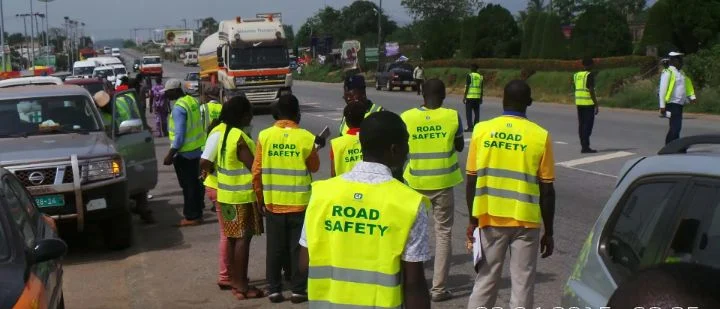

The National Road Safety Authority (NRSA) has released new data revealing a sharp increase in road crashes and fatalities in the Ashanti Region during 2025 compared to 2024. The report has sparked widespread concern among policymakers, transport operators, and the general public, highlighting the urgent need for stronger enforcement of traffic regulations and improved road safety measures.
The Ashanti Region, one of Ghana’s busiest transport corridors, has long struggled with road safety challenges. With Kumasi serving as a central hub for trade, commerce, and travel, the region experiences heavy vehicular traffic daily. From long‑distance buses and cargo trucks to motorcycles and private cars, the mix of vehicles on the roads often creates congestion and increases the risk of accidents.
According to NRSA officials, 2025 witnessed a significant rise in both crashes and fatalities, reversing earlier gains made in reducing road accidents. The data points to worrying trends, including reckless driving, speeding, drunk driving, and poor road infrastructure as major contributing factors.
While the NRSA report did not provide exact figures in its preliminary release, officials confirmed that fatalities in 2025 were substantially higher than in 2024, with hundreds of lives lost and thousands injured. The Ashanti Region accounted for one of the highest proportions of national road accidents, underscoring its vulnerability.
Key indicators highlighted include:
- Increase in fatalities: More deaths recorded in 2025 compared to 2024.
- Rise in serious injuries: Victims suffering long‑term disabilities due to crashes.
- Higher crash frequency: More reported accidents per month, particularly on highways linking Kumasi to Accra, Obuasi, and Techiman.
- Motorcycle involvement: A growing number of crashes involving motorcycles and tricycles, often linked to unsafe riding practices.
The NRSA identified several factors behind the troubling increase:
- Reckless Driving: Many drivers continue to disregard traffic rules, overtaking dangerously and speeding excessively.
- Alcohol and Substance Use: Drunk driving remains a persistent problem, especially during weekends and festive seasons.
- Poor Road Infrastructure: Potholes, inadequate signage, and lack of pedestrian crossings contribute to accidents.
- Vehicle Condition: A significant number of vehicles on the roads are poorly maintained, increasing the risk of mechanical failures.
- Motorcycle Boom: The rise of commercial motorcycles (“okada”) has added complexity to traffic management, with riders often ignoring safety regulations.
The rise in crashes has had devastating consequences for families and communities. Beyond the immediate loss of life, survivors often face long‑term health challenges, including disabilities, trauma, and financial hardship. Hospitals in Kumasi and surrounding districts have reported increased admissions of accident victims, straining already limited resources.
Socially, the impact is profound. Families lose breadwinners, children are orphaned, and communities are destabilized. Economically, the cost of road accidents—including medical expenses, lost productivity, and property damage—runs into millions of cedis annually.
In response to the alarming statistics, the NRSA has pledged to intensify road safety campaigns and enforcement measures. Officials announced plans to:
- Deploy more traffic police on highways and urban roads.
- Install speed cameras and monitoring devices at accident‑prone areas.
- Strengthen collaboration with transport unions to educate drivers.
- Launch public awareness campaigns targeting reckless driving and drunk driving.
- Advocate for improved road infrastructure, including better signage, lighting, and pedestrian facilities.
The government has also signaled its commitment to addressing the crisis, with the Ministry of Roads and Highways promising accelerated road rehabilitation projects in the Ashanti Region
Civil society organizations have welcomed the NRSA’s report, describing it as a wake‑up call. Advocacy groups argue that road safety must become a national priority, urging government to allocate more resources to enforcement and education.
Community leaders in Kumasi and surrounding towns have also called for grassroots initiatives, including community‑based road safety clubs, school education programs, and stricter monitoring of motorcycle riders. Religious leaders have joined the chorus, urging congregants to respect traffic laws and prioritize safety.
The Ashanti Region’s troubling statistics reflect a broader national challenge. Ghana continues to record high rates of road accidents compared to other countries in the sub‑region. Experts warn that without decisive action, the country risks losing more lives and undermining economic productivity.
The NRSA’s report underscores the need for a multi‑sectoral approach—combining enforcement, infrastructure development, public education, and community engagement. It also highlights the importance of political will in sustaining reforms and ensuring accountability.
The rise in road crashes and fatalities in the Ashanti Region during 2025 is a sobering reminder of the urgent need for stronger road safety measures. The NRSA’s report has laid bare the scale of the crisis, challenging government, civil society, and citizens to act decisively.
As Ghana moves forward, the lessons from Ashanti must guide national policy. Road safety is not merely a technical issue—it is a matter of life and death, affecting families, communities, and the nation’s future. The time for action is now, and the responsibility lies with all stakeholders to ensure safer roads for every Ghanaian.