
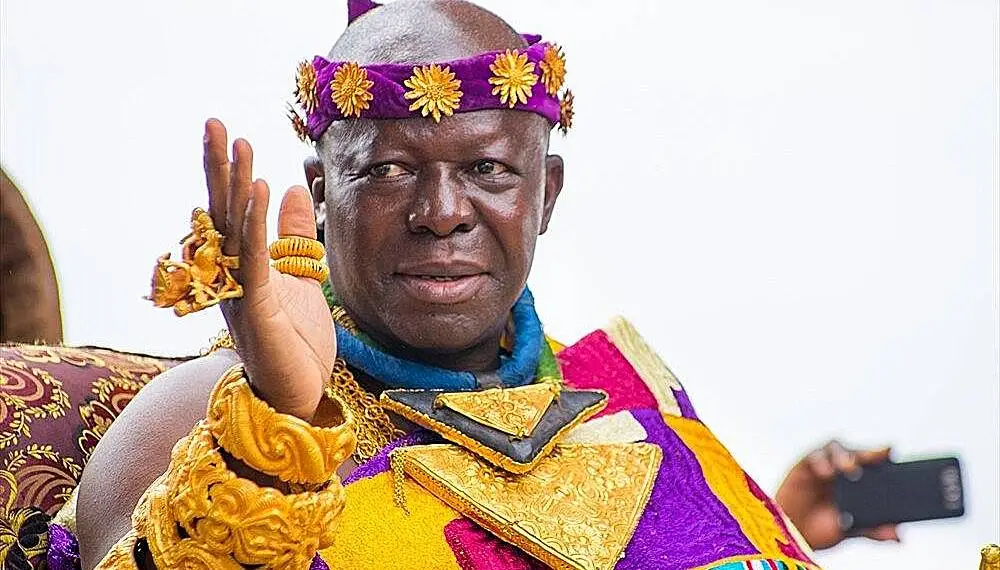

The departure of Otumfuo Osei Tutu II, the Asantehene, for an overseas vacation has become a subject of widespread cultural attention in Ghana. While the monarch’s travels are not unusual, this particular journey has sparked conversations about tradition, modernity, and the symbolic role of the Asantehene in Ghanaian society. His departure has been covered extensively by local media, with many Ghanaians reflecting on the cultural significance of his presence and absence.
Background: The Asantehene’s Role in Ghanaian Society
Otumfuo Osei Tutu II is not only the traditional ruler of the Ashanti Kingdom but also a national figure whose influence extends beyond cultural boundaries. Since ascending the throne in 1999, he has been recognized for his leadership in preserving Ashanti traditions, promoting education, and advocating for peace and development. His presence at national events often symbolizes unity, while his interventions in political and social matters carry weight across the country.
The Asantehene’s departure for vacation, therefore, is more than a personal journey—it is a moment that resonates with cultural symbolism. For many, it reflects the balance between tradition and modernity, showing that even revered traditional leaders embrace rest and recreation in a globalized world.
The announcement of his vacation has attracted significant cultural attention. Citizens across Ghana have expressed admiration for the Asantehene’s ability to blend tradition with modern practices. Social media platforms have been filled with messages of goodwill, prayers for safe travels, and reflections on his contributions to national development.
Cultural commentators note that the Asantehene’s travels often highlight the global relevance of Ghanaian traditions. His presence abroad serves as a reminder that traditional leadership remains influential in contemporary contexts, bridging the gap between heritage and modern diplomacy.
At the same time, his absence from Kumasi and other ceremonial duties has sparked discussions about continuity of traditional governance. Chiefs and elders within the Ashanti Kingdom are expected to maintain cultural activities and ensure that the rhythm of traditional life continues seamlessly during his vacation.
The Asantehene’s departure carries symbolic weight in several ways:
- Tradition Meets Modernity: His vacation underscores the evolving role of traditional leaders in a modern world, showing that they too participate in global practices of leisure and travel.
- Cultural Diplomacy: His presence abroad often serves as informal cultural diplomacy, projecting Ghana’s heritage to international audiences.
- Continuity of Leadership: His absence highlights the resilience of traditional structures, where elders and sub‑chiefs ensure continuity in governance and cultural practices.
- Public Fascination: The attention given to his departure reflects the deep respect and fascination Ghanaians have for their traditional leaders.
The cultural attention surrounding the Asantehene’s vacation speaks to the enduring relevance of traditional leadership in Ghana. Despite modernization and political change, traditional rulers continue to command respect and influence. Their actions—whether ceremonial, developmental, or personal—often spark national conversations about identity, heritage, and values.
Otumfuo Osei Tutu II’s departure also highlights the intersection of personal life and public symbolism. While his vacation is a private matter, it becomes a public event because of his stature. This duality reflects the unique position of traditional leaders, who embody both personal humanity and collective cultural identity.
Local media outlets have covered the Asantehene’s departure extensively, framing it as both a cultural and social event. Commentators have emphasized his contributions to education through the Otumfuo Education Fund, his role in mediating political tensions, and his efforts to preserve Ashanti traditions.
Public commentary has also focused on the importance of rest and rejuvenation for leaders. Many Ghanaians have expressed the view that his vacation is well‑deserved, given his decades of service to the Ashanti Kingdom and Ghana at large.
During his absence, traditional governance in the Ashanti Kingdom remains intact. Chiefs, elders, and council members are expected to oversee cultural ceremonies, adjudicate disputes, and maintain the rhythm of traditional life. This continuity reflects the strength of Ashanti institutions, which are designed to function collectively even when the Asantehene is not physically present.
The resilience of these structures underscores the enduring relevance of traditional governance in Ghana. It demonstrates that while the Asantehene is the symbolic head, the system is supported by a network of leaders who ensure stability and continuity.
Otumfuo Osei Tutu II’s departure for vacation is more than a personal journey—it is a cultural moment that resonates across Ghana. It highlights the evolving role of traditional leaders, the intersection of heritage and modernity, and the enduring respect Ghanaians hold for their monarchs.
As the Asantehene enjoys his time abroad, his absence serves as a reminder