
The African Union (AU) Commission has initiated a comprehensive air pollution study in Ghana, focusing on baseline mapping of pollution sources across the country. This initiative forms part of a continental effort to address the growing challenge of environmental health risks that threaten millions of lives in Africa.
By conducting scientific assessments and establishing baseline data, the AU aims to provide governments, policymakers, and communities with accurate information to guide interventions and policy reforms.
Air pollution has emerged as one of the leading environmental health threats globally, with Africa facing unique challenges due to rapid urbanization, industrial growth, and weak regulatory enforcement.
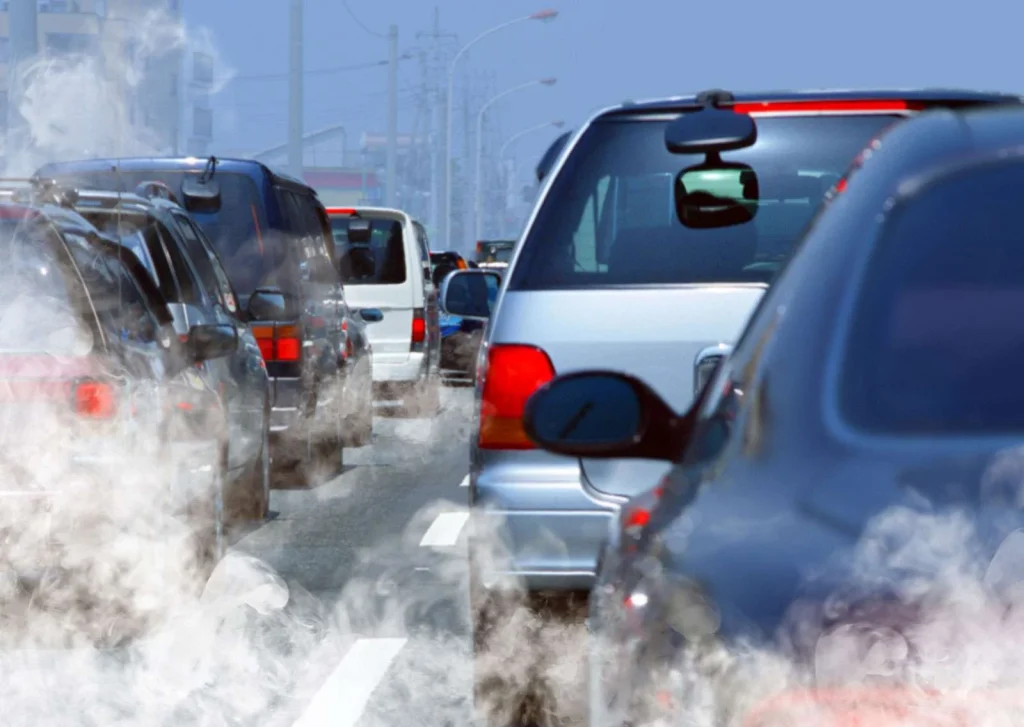
- In Ghana, urban centers such as Accra, Kumasi, and Takoradi have recorded high levels of particulate matter (PM2.5 and PM10), largely from vehicular emissions, industrial activities, and open burning of waste.
- The World Health Organization (WHO) estimates that air pollution contributes to thousands of premature deaths annually in sub-Saharan Africa.
- Ghana’s Ministry of Environment, Science, Technology and Innovation (MESTI) has acknowledged the urgent need for data-driven strategies to combat this crisis.
The AU’s baseline mapping project is therefore a critical step toward understanding the sources, scale, and impact of air pollution in Ghana.
The AU Commission’s initiative is designed to achieve several strategic objectives:
- Identify and categorize major pollution sources (transport, industry, agriculture, domestic burning).
- Establish baseline data for air quality monitoring across Ghana.
- Support national and local governments in designing evidence-based policies.
- Raise public awareness on the health impacts of air pollution.
- Integrate Ghana’s findings into a continental database for comparative analysis.
This approach ensures that Ghana’s environmental health policies are aligned with continental and global standards.
The study employs a multi-disciplinary methodology, combining scientific measurements, satellite data, and community-level surveys.
- Air quality sensors have been deployed in urban and rural areas to measure pollutants such as carbon monoxide, nitrogen oxides, sulfur dioxide, and particulate matter.
- Satellite imagery is being used to track regional pollution patterns.
- Community engagement ensures that local experiences and traditional knowledge are incorporated into the findings.
This holistic approach guarantees that the data collected is both scientifically robust and socially relevant.
The health risks associated with air pollution are severe:
- Respiratory diseases such as asthma, bronchitis, and chronic obstructive pulmonary disease (COPD).
- Increased cases of cardiovascular illnesses linked to long-term exposure.
- Children and the elderly are particularly vulnerable, with higher risks of premature death.
Environmentally, air pollution contributes to:
- Climate change through greenhouse gas emissions.
- Reduced agricultural productivity due to soil and water contamination.
- Loss of biodiversity in ecosystems exposed to toxic pollutants.
The AU Commission emphasizes that tackling air pollution is not only a health priority but also a developmental necessity.
This initiative is part of a larger AU program aimed at environmental health risk reduction across Africa.
- Countries including Nigeria, Kenya, and South Africa are also participating in similar baseline studies.
- The AU plans to create a continental air quality index, enabling cross-country comparisons and regional policy harmonization.
- The project aligns with the African Agenda 2063 and the UN Sustainable Development Goals (SDGs), particularly Goal 3 (Good Health and Well-being) and Goal 13 (Climate Action).
The success of the project depends on multi-stakeholder collaboration:
- Government agencies: Ministry of Health, Environmental Protection Agency (EPA), and MESTI.
- Civil society organizations: Advocacy groups promoting clean energy and waste management reforms.
- Academic institutions: Universities conducting research and training in environmental sciences.
- International partners: WHO, UNEP, and donor agencies supporting capacity building.
This collaborative framework ensures that the study’s findings are translated into actionable policies.
The AU Commission’s air pollution study in Ghana marks a milestone in Africa’s fight against environmental health risks. By establishing baseline data, the initiative empowers Ghana to design effective interventions, protect public health, and contribute to a continental strategy for cleaner air.
Air pollution is not just an environmental issue—it is a matter of life, dignity, and sustainable development.