

Introduction
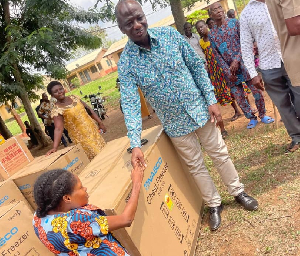
The Municipal Chief Executive (MCE) of Akatsi South has presented livelihood equipment to 33 persons with disabilities (PWDs) and donated new classroom desks to Experimental School One. This initiative reflects the government’s commitment to inclusive development, education support, and empowerment of vulnerable groups within the municipality.
- 33 persons with disabilities received livelihood equipment to enhance their economic independence.
- The equipment included tools and resources tailored to support small-scale businesses and income-generating activities.
- Experimental School One benefited from the provision of new classroom desks, aimed at improving the learning environment for pupils.
- The initiative was carried out under the District Assembly Common Fund (DACF) allocation for persons with disabilities.
The intervention is expected to:
- Strengthen the economic resilience of persons with disabilities by providing them with tools for self-employment.
- Reduce social exclusion and promote equal opportunities.
- Improve the quality of education by addressing infrastructure gaps in schools.
- Enhance community confidence in local governance and development programs.
The Akatsi South MCE emphasized that:
- The government is committed to empowering persons with disabilities through practical support.
- Education remains a priority sector, with investments in infrastructure and teaching resources.
- The initiative demonstrates the importance of inclusive governance and social responsibility.
- Partnerships with civil society and community leaders will be strengthened to sustain progress.
Despite the intervention, challenges remain:
- Limited resources to meet the needs of all persons with disabilities.
- Infrastructure deficits in schools across the municipality.
- Socio-economic barriers that hinder full participation of PWDs in community life.
- Need for continuous monitoring and evaluation to ensure effective use of distributed equipment.
- Beneficiaries expressed gratitude, describing the support as a lifeline for their livelihoods.
- School authorities welcomed the desks, noting that they will ease overcrowding and improve classroom management.
- Civil society groups urged the government to expand similar initiatives to other communities.
- Community leaders highlighted the importance of sustainability and accountability in such programs.
The presentation of livelihood equipment to 33 persons with disabilities and classroom desks to Experimental School One underscores the government’s commitment to inclusive development and education support. By empowering vulnerable groups and improving school infrastructure, the initiative strengthens Ghana’s broader agenda of social equity, empowerment, and sustainable growth. The success of this program will depend on continued investment, effective monitoring, and community participation to ensure lasting impact.