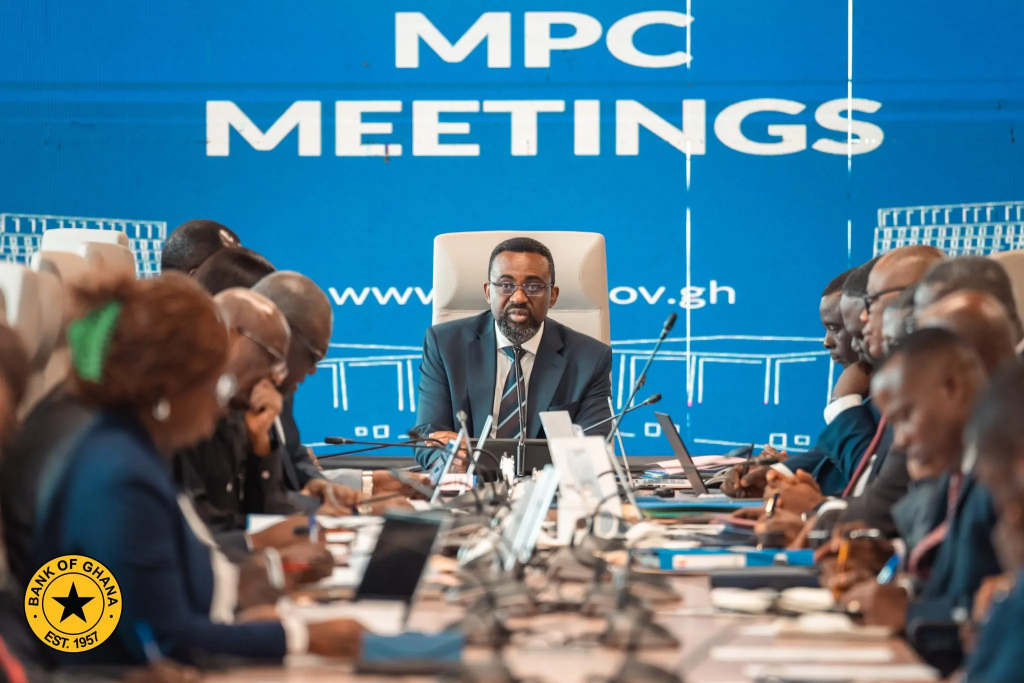

Accra, March 16, 2026 — The Bank of Ghana’s Monetary Policy Committee (MPC) has commenced its 129th meeting, with discussions expected to center on Ghana’s persistent inflationary pressures, exchange rate volatility, and the depreciation of the cedi.
Inflation remains well above the central bank’s target band of 5%–8%, driven largely by global oil price hikes and rising food costs. Analysts say the committee’s deliberations will be crucial in shaping monetary policy responses, particularly regarding interest rates and measures to stabilize the local currency.
- Global Factors: Surging oil and commodity prices continue to weigh heavily on Ghana’s economy.
- Domestic Impact: The cedi’s depreciation has increased import costs, further fueling inflation.
- Policy Challenge: Balancing inflation control with economic growth remains the MPC’s key task.
The outcome of the meeting could influence:
- Interest Rates: Possible adjustments to curb inflationary pressures.
- Currency Stability: Measures to support the cedi against major trading currencies.
- Investor Confidence: Signals to domestic and international markets on Ghana’s economic direction.
Economists and market watchers are closely monitoring the MPC’s decisions, which are expected to be announced later this week. The committee’s stance will provide critical guidance for businesses, households, and investors navigating Ghana’s current economic climate.